Golf – where to start? It can be intimidating, but it shouldn’t be. The best way to start, is by finding your nearest driving range and hitting a ton of balls. But before you do that, first, find clubs that fit, then follow the basics of hitting below.
1) Find clubs that fit
It’s important to find clubs that fit. The worst thing you can do for kids is give them used adult clubs that are too heavy and too long – it will make it extremely hard to make a natural swing and make good contact with the ball. Retailers often sell kids clubs by age; however, not every kid is the same height at a given age. I like US Kids clubs because they are sold by height and have an extensive selection by club lengths that they sell in 3″ intervals, organized by color coding. They sell full sets (with bag), club sets, individual clubs, and clubs with a grip trainer.
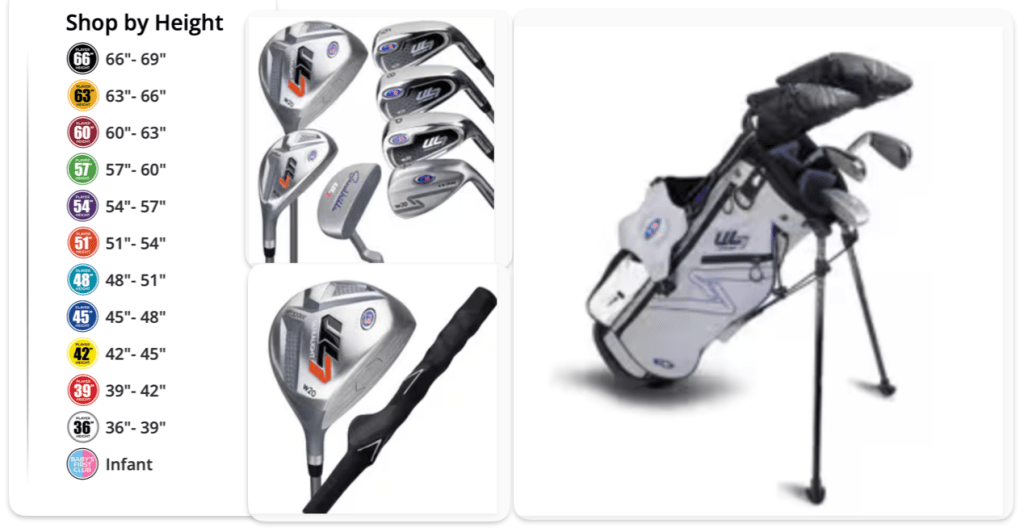
So how many clubs do you need? This depends on how far you hit the ball. If you hit your driver less than 120 yards, I recommend starting with a 5 piece set that includes a driver, hybrid, pitching wedge (or 9 iron), 7 iron, and putter. In addition to the stock 5 piece set, I would recommend getting a sand wedge – this will come in handy around the green.
2) Gripping the club
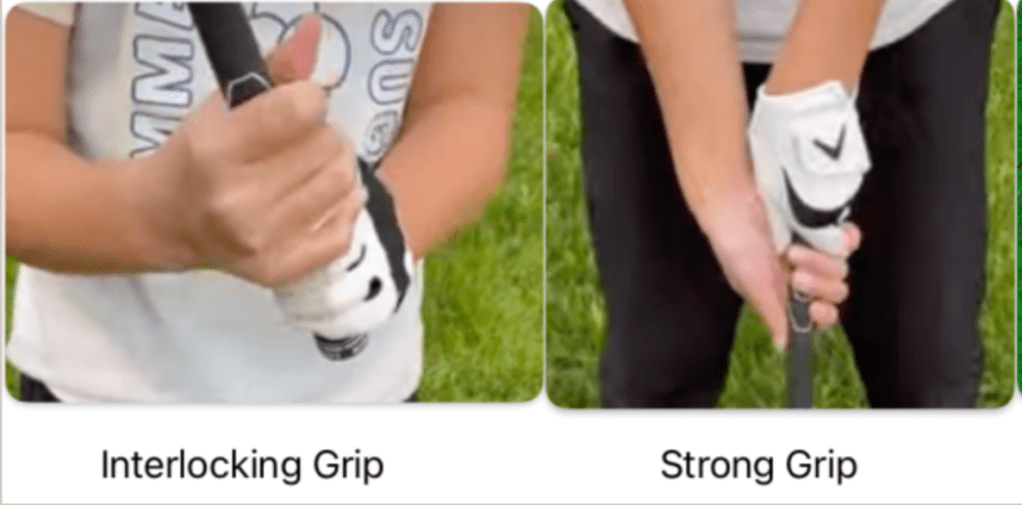
The biggest mistake that I see is when new players hold their club like a hockey stick. The key to properly holding a golf club is keeping your hands together so they are touching. The most common ways to hold it are an Interlocking grip, or an Overlapping grip. (Explained for right handers)
Both styles start by putting your left hand close to the end of the grip (hold the club with your fingers instead of your palms for a loose grip). For an Overlapping grip, take your pinky finger on your right hand and overlap it on top of your left hand’s index finger. For an interlocking grip, link your left hand’s index finger with your right hand’s pinky (this is what my kids prefer and most golfers).
If both styles feel uncomfortable, put your hand together like holding a baseball bat. The important part is making sure your hands are touching
3) The stance
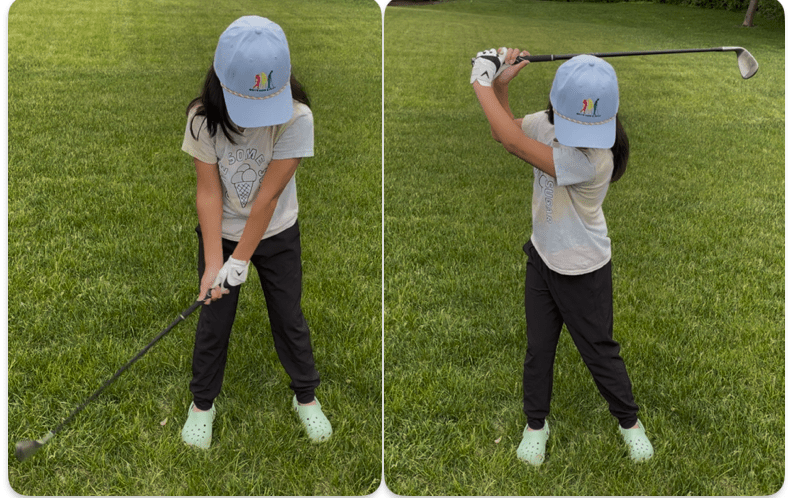
Stand with your feet about shoulder width apart, and keep and even balance between your feet. Keep your back straight, and at an angle (picture yourself sitting on the edge of a barstool).
The distance to the ball is important – the ball should be a distance where your arms are comfortably hanging (about one fist length away from the body). Make sure you’re not reaching too far out, or that the club is too close to your body.
4) The swing
The swing starts with a backswing. Don’t overlook this part – it is the foundation for the rest of your swing.
The backswing is really 2 steps: 1) pull your hands, arms, club back about 2 feet, then 2) bring the club up while breaking your wrist. For righties, try to keep your left arm straight throughout the swing, and try to keep the club parallel to the ground at the top of the backswing. After you swing, hold the pose- this promote a nicely balanced swing.
Now that you made it this far, give it a good rip! You’ll have many variations of your swing in the beginning. My philosophy is that you need to just start hitting, and hitting a lot – don’t think about lessons right away – first you need to form a swing before you can correct it.
Happy golfing!
 TripleBirdies Junior Golf